In today’s digital first world, marketing has become one of the most powerful tools for business growth. Search engines, social media platforms, email campaigns, and paid advertisements shape how businesses are discovered, trusted, and chosen. For many entrepreneurs, digital marketing is simply a commercial activity designed to generate visibility, leads, and revenue.
However, for Muslim entrepreneurs and Muslim owned businesses, digital marketing raises an important and deeply personal question: can digital marketing truly be halal while supporting faith aligned marketing and ethical business growth?
This concern is not theoretical. Many Muslim business owners feel uneasy when working with conventional marketing agencies that prioritize results without considering Islamic values. Practices such as misleading advertising, exaggerated claims, unsafe ad placements, interest based payment models, or content environments that conflict with modesty and ethics often create discomfort. As a result, Muslim entrepreneurs around the world are searching for clarity, confidence, and faith aligned solutions.
This Islamic guide explores whether digital marketing can be halal, how Islamic principles apply to modern marketing practices, and what Muslim business owners should look for when choosing a marketing approach. It also explains how halal digital marketing allows businesses to grow ethically while remaining competitive in global markets.
Understanding the Foundations of Halal in Business
In Islam, business is not discouraged. In fact, trade and entrepreneurship are strongly encouraged when conducted ethically and responsibly. Islam recognizes business as a means of sustenance, community development, and personal dignity. However, it also places clear moral boundaries around how wealth is earned. Honesty, transparency, fairness, and accountability are central principles in all commercial dealings.
The Qur’an repeatedly commands believers to deal justly, fulfill contracts, and avoid deception or exploitation. Likewise, the Prophet Muhammad ﷺ emphasized truthful trade, fair measurement, and trustworthy conduct, highlighting that ethical business is not only a social responsibility but also an act of worship when done with the right intention.
Halal, in its broader sense, refers not only to permissible products, but also to permissible processes. This means that how a business earns profit matters just as much as what it sells. Income generated through deception, exaggeration, manipulation, or unethical practices undermines the spiritual integrity of business success. Even if a product or service itself is halal, the methods used to promote, price, or sell it can make the income questionable.
For Muslim entrepreneurs, this understanding creates a higher standard of responsibility. Business decisions must be evaluated not only through a commercial lens, but also through an ethical and spiritual one. This mindset encourages long term thinking, accountability, and sincerity in all interactions with customers, partners, and the wider community.
When applied to digital marketing, these principles require Muslim entrepreneurs to carefully evaluate strategies, messaging, platforms, and financial arrangements. Marketing should not mislead, pressure, or exploit audiences. Instead, it should inform, educate, and communicate genuine value. The goal is not to reject modern tools or innovation, but to ensure that they are used responsibly and remain within Islamic boundaries.
What Is Digital Marketing in Simple Terms
Digital marketing refers to all promotional activities carried out online to reach potential customers and communicate a brand’s value. This includes search engine optimization, social media marketing, content creation, paid advertising, email marketing, and website optimization. These tools help businesses build visibility, attract relevant audiences, and convert interest into meaningful engagement or sales.
At its core, digital marketing is simply a method of communication. It allows businesses to share information about their products or services and helps customers make informed decisions. Digital marketing itself is neutral. Like any tool, it can be used ethically or unethically depending on intention, execution, and boundaries.
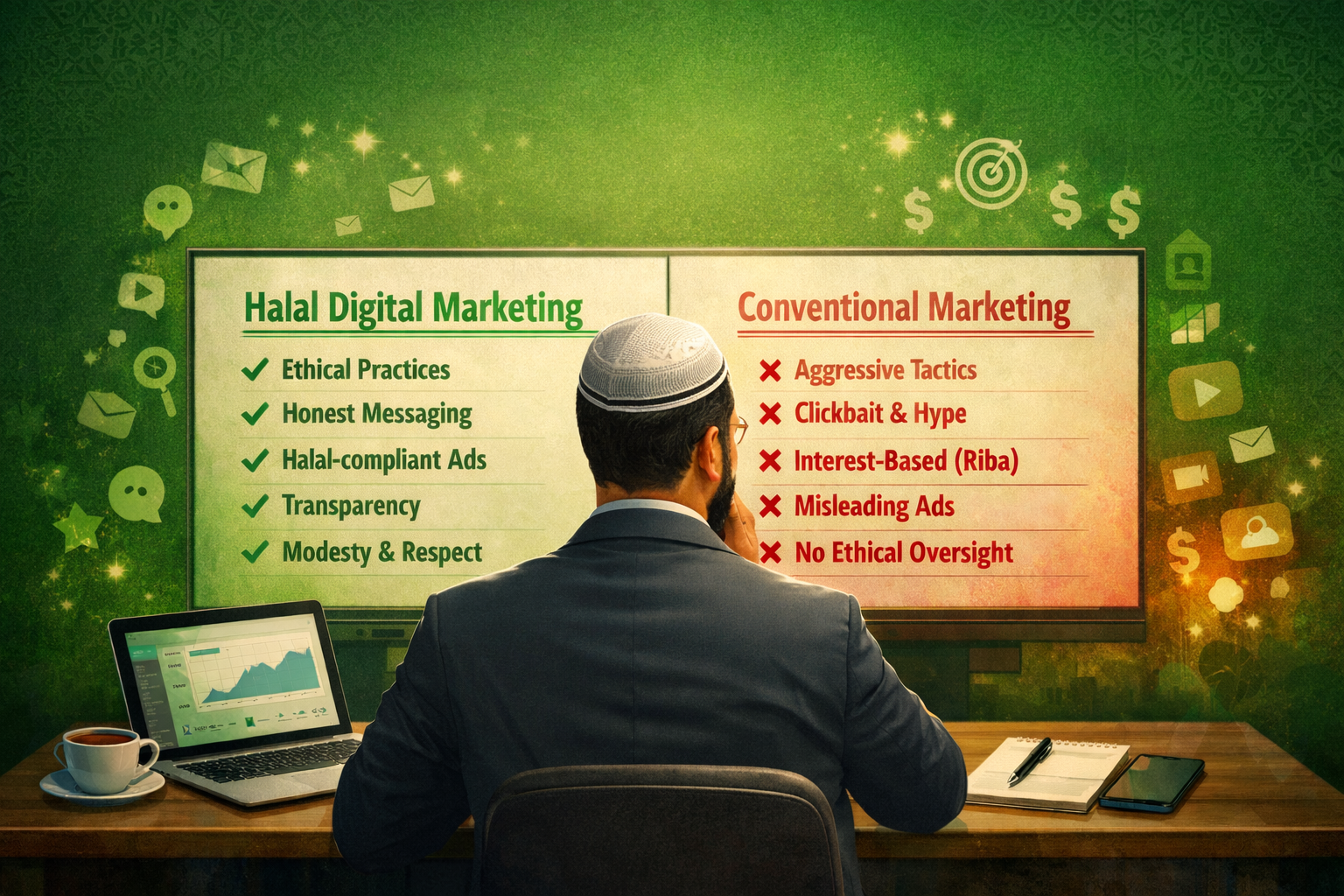
The permissibility of digital marketing depends entirely on how it is practiced. Ethical digital marketing focuses on accuracy, transparency, and respect for the audience. Unethical digital marketing relies on manipulation, exaggerated claims, emotional pressure, or misleading tactics. This distinction is especially important for Muslim entrepreneurs who want to grow without compromising their values.
When digital marketing is aligned with Islamic ethics, it becomes a powerful and halal means of growth. When it ignores ethical limits, it can lead to discomfort, loss of trust, and spiritual concern. Understanding this difference empowers Muslim business owners to make informed choices and build brands that reflect both professionalism and faith.
Common Concerns Muslim Entrepreneurs Have About Digital Marketing
Many Muslim business owners hesitate to invest in digital marketing because of genuine and well founded concerns. These concerns often arise from observing common industry practices that conflict with Islamic values. They include misleading advertising, emotional manipulation, unsafe ad placements, inappropriate or immodest visuals, and financial models involving riba. Some entrepreneurs also worry about copying competitors without originality, exaggerating benefits to increase conversions, or using fear based tactics that pressure customers into quick decisions.
Another common concern is loss of control. When working with conventional marketing agencies, Muslim entrepreneurs may feel disconnected from how their brand is being represented online. Ads may appear alongside inappropriate content, messages may be framed aggressively, or visuals may be chosen without considering modesty or cultural sensitivity. Over time, this can damage trust with Muslim audiences and create discomfort for business owners.
Islam places strong emphasis on truthfulness, accountability, and trust (amanah) in all dealings. The Prophet Muhammad ﷺ taught that honesty leads to righteousness, and righteousness leads to Paradise. This principle applies directly to marketing communication. If marketing content misrepresents reality, hides essential information, exaggerates outcomes, or pressures customers unfairly, it becomes ethically problematic and spiritually concerning.
For Muslim entrepreneurs, these concerns are not obstacles to growth they are reminders to seek ethical clarity and faith aligned solutions.
Faith Aligned Marketing in Islam: Is Digital Marketing Halal?
Yes, digital marketing can be halal when it follows islamic ethics. The permissibility of digital marketing depends on whether it upholds honesty, avoids deception, respects modesty, and operates within lawful and transparent financial structures. Faith aligned marketing ensures that growth is achieved without compromising Islamic values or ethical responsibility.
Marketing that informs, educates, and genuinely serves customers is fully consistent with Islamic teachings. Faith aligned digital marketing focuses on clear communication, truthful representation, and respectful engagement with audiences rather than manipulation or exaggeration.
The Qur’an encourages fair trade and explicitly warns against consuming wealth unjustly. When digital marketing is used to communicate genuine value, set honest expectations, and help customers make informed decisions, it becomes a halal and faith aligned means of growth, rather than a questionable or ethically unclear practice.
By adopting it, Muslim entrepreneurs can confidently use modern digital tools while remaining accountable to Islamic principles ensuring that business success is built on integrity, transparency, and purpose.
Ethical Advertising in the Light of Qur’an and Sunnah
Islam strongly condemns deception in trade. The Prophet Muhammad ﷺ warned against cheating and misrepresentation in business dealings. Ethical advertising must therefore present products and services accurately. Testimonials, promises, and claims should reflect real outcomes rather than exaggerated expectations.
Paid advertising can be halal when it is transparent, truthful, and placed in appropriate environments. What matters is not the platform itself, but the content, intent, and context of the advertisement.
The Importance of Halal Income and Barakah
Halal income carries barakah, meaning spiritual blessing. Barakah is not always visible in immediate profits, but it manifests in long term stability, peace of mind, and positive impact. Businesses that grow through ethical marketing often build stronger customer relationships and enjoy sustainable success.
Islam teaches that wealth gained through lawful means brings benefit, while wealth gained through questionable practices leads to harm. Halal digital marketing supports both material growth and spiritual well being.
Why Muslim Entrepreneurs Need Halal Digital Marketing Today
Muslim entrepreneurs operate in competitive markets across the UK, USA, Canada, Australia, and India. These markets demand strong digital presence, but also expose businesses to unethical practices. Halal digital marketing offers a balanced solution that allows Muslim businesses to compete without compromising values.
Muslim consumers are also becoming more conscious. They increasingly prefer brands that reflect integrity, transparency, and ethical conduct. Marketing that aligns with Islamic values builds trust and loyalty within the Muslim community and beyond.
How DigiMuslim Approaches Halal Digital Marketing
DigiMuslim was created with a clear and focused mission: to support Muslim entrepreneurs who want to grow their businesses digitally without compromising Islamic values. In a market dominated by conventional agencies that prioritize speed and numbers over ethics, DigiMuslim stands as a faith aligned alternative that understands both modern digital marketing and Islamic business principles.
Our approach to halal digital marketing is grounded in Islamic ethics, transparency, and accountability. Every strategy we design is carefully evaluated to ensure it aligns with halal guidelines and avoids practices that may create ethical or spiritual concerns. DigiMuslim’s operations are guided by qualified Islamic scholars (Aalims), ensuring that our marketing methods remain compliant with Shariah principles while still delivering strong, measurable business outcomes.
At DigiMuslim, we follow a halal first marketing framework. This means that before any campaign is launched, we assess its messaging, platforms, visuals, targeting methods, and financial structures. Our focus is not only on what performs well, but also on what is ethically sound. We believe that marketing should inform, educate, and serve audiences—not manipulate or pressure them.
Core Pillars of DigiMuslim’s Halal Marketing Approach
Our halal digital marketing approach is built on several key pillars:
- Halal First Strategy Development:
We design marketing strategies that prioritize ethical growth from the very beginning. This includes honest brand positioning, realistic promises, and clear value communication. - Ethical SEO and Content Marketing:
DigiMuslim focuses on long term SEO practices that build authority and trust over time. We avoid black hat techniques, misleading keywords, or deceptive content. Our content strategies are educational, value driven, and audience focused. - Transparent Reporting and Communication:
Clients receive clear, easy to understand reports that explain what is working, what needs improvement, and how strategies are evolving. Transparency is not optional—it is a core Islamic value. - Culturally Sensitive and Modest Branding:
All visuals, language, and messaging are reviewed to ensure they respect modesty, cultural norms, and the values of Muslim audiences across different regions. - Global Market Understanding:
DigiMuslim works with Muslim businesses across the UK, USA, Canada, Australia, and India. This global exposure allows us to tailor campaigns to regional sensitivities while maintaining a unified ethical standard.
Every campaign at DigiMuslim is designed to balance performance with principles. Growth is important, but growth achieved without trust or integrity is never sustainable. Our goal is to help Muslim businesses build brands that their communities are proud to support.
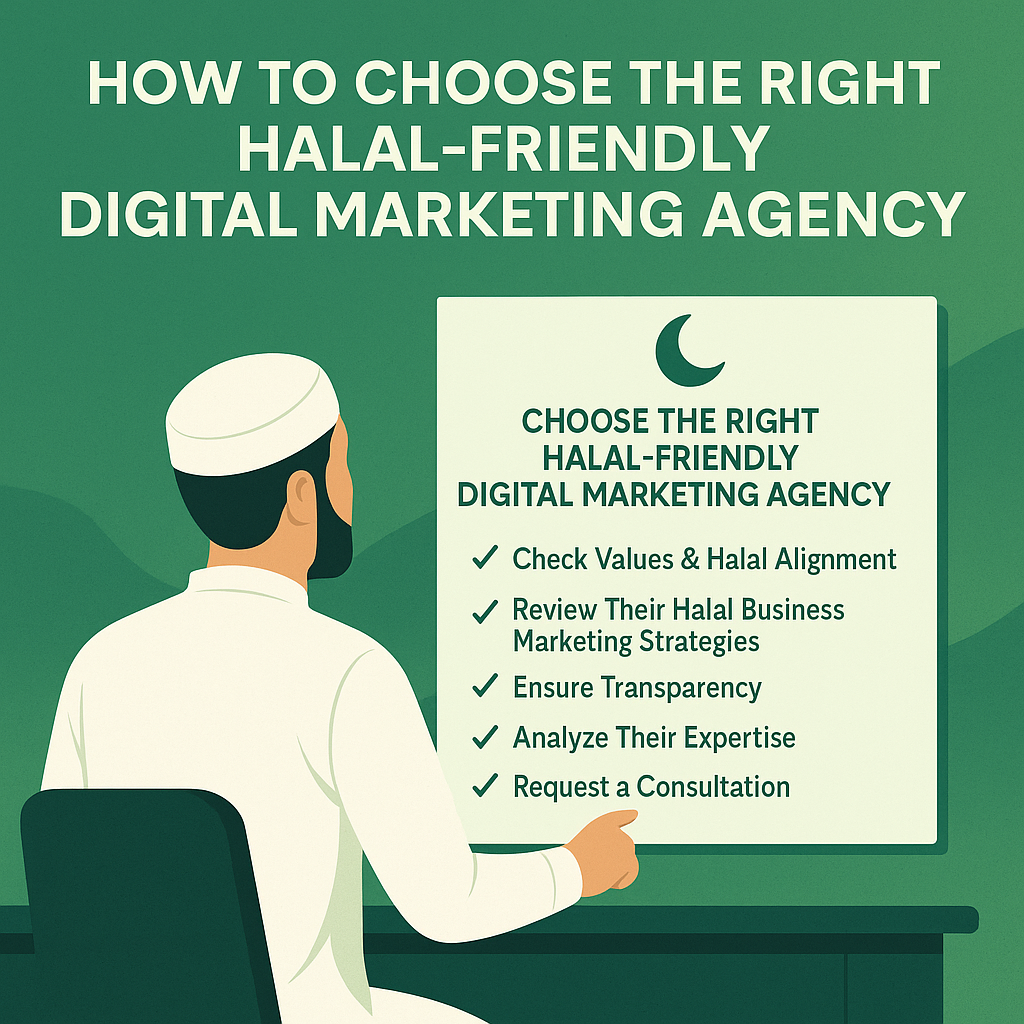
Choosing the Right Marketing Path as a Muslim Business Owner
Every Muslim entrepreneur eventually faces a critical decision: how to grow their business in a way that aligns with both professional goals and Islamic values.
The real choice is not between growth and faith.
It is between short term shortcuts and long term integrity.
Shortcuts may bring immediate results, but they often require compromises—misleading ads, unsafe platforms, or financial practices that cause discomfort. Long term integrity, on the other hand, builds a business that is respected, trusted, and resilient.
Halal digital marketing proves that success and ethics can coexist. When marketing is aligned with faith based principles, businesses gain more than just revenue. They gain peace of mind, clarity of purpose, and confidence in the path they are taking.
By choosing halal digital marketing, Muslim business owners invest in:
- Trust with their customers
- Stability in their operations
- Stronger community relationships
- A reputation built on honesty and responsibility
These qualities are difficult to measure with analytics alone, but they define the long term success of any meaningful business.
A Final Reflection for Muslim Entrepreneurs
In a digital world driven by speed, competition, and constant pressure to perform, halal digital marketing offers something rare and valuable: clarity, integrity, and direction.
It allows Muslim entrepreneurs to grow confidently, knowing that their efforts are aligned with Islamic values and accountability to Allah. When business decisions are made with intention and ethics, success carries a deeper sense of fulfillment.
Business success achieved through halal means brings peace to the heart and strength to the wider community. It supports families, creates employment, and contributes positively to society. When intention, ethics, and effort align, digital marketing becomes not just permissible—but truly purposeful.
Book Your Free Halal Marketing Consultation
If you are a Muslim entrepreneur seeking ethical, transparent, and halal digital growth, DigiMuslim is here to support you at every stage of your journey.
By booking a free consultation, you will be able to:
- Review your current digital marketing efforts
- Identify any ethical risks or misalignments
- Understand where improvements can be made
- Build a marketing strategy tailored to your goals
Our team will listen carefully, provide honest guidance, and help you move forward with clarity and confidence.
Let’s grow your business in a way that earns trust, delivers results, and carries barakah.