
In today’s highly competitive digital economy, marketing is no longer optional. Every business whether a local store, an online brand, a service provider, or a global company depends on digital marketing to attract customers, build trust, and grow sustainably. Search engines, social media platforms, paid advertising, email campaigns, and content marketing now shape how brands are discovered, evaluated, and remembered.
For many business owners, choosing a digital marketing agency is simply a strategic or financial decision. The focus is usually on results: more leads, higher conversions, better visibility, and increased revenue. However, for Muslim entrepreneurs and Muslim owned businesses, this choi goes far beyond performance metrics and return on investment. Choosing halal digital marketing is a moral, ethical, and values driven decision that protects both business success and Islamic principles.
Muslim businesses often ask an important and very valid question:
Is digital marketing halal, or does it involve practices that conflict with Islamic values?
This question arises because many conventional marketing methods operate in grey areas using exaggerated claims, manipulative messaging, unsafe advertising placements, or financial systems that may not align with Islamic ethics. Over time, this creates discomfort and uncertainty for Muslim business owners who want to grow, but not at the cost of their principles.
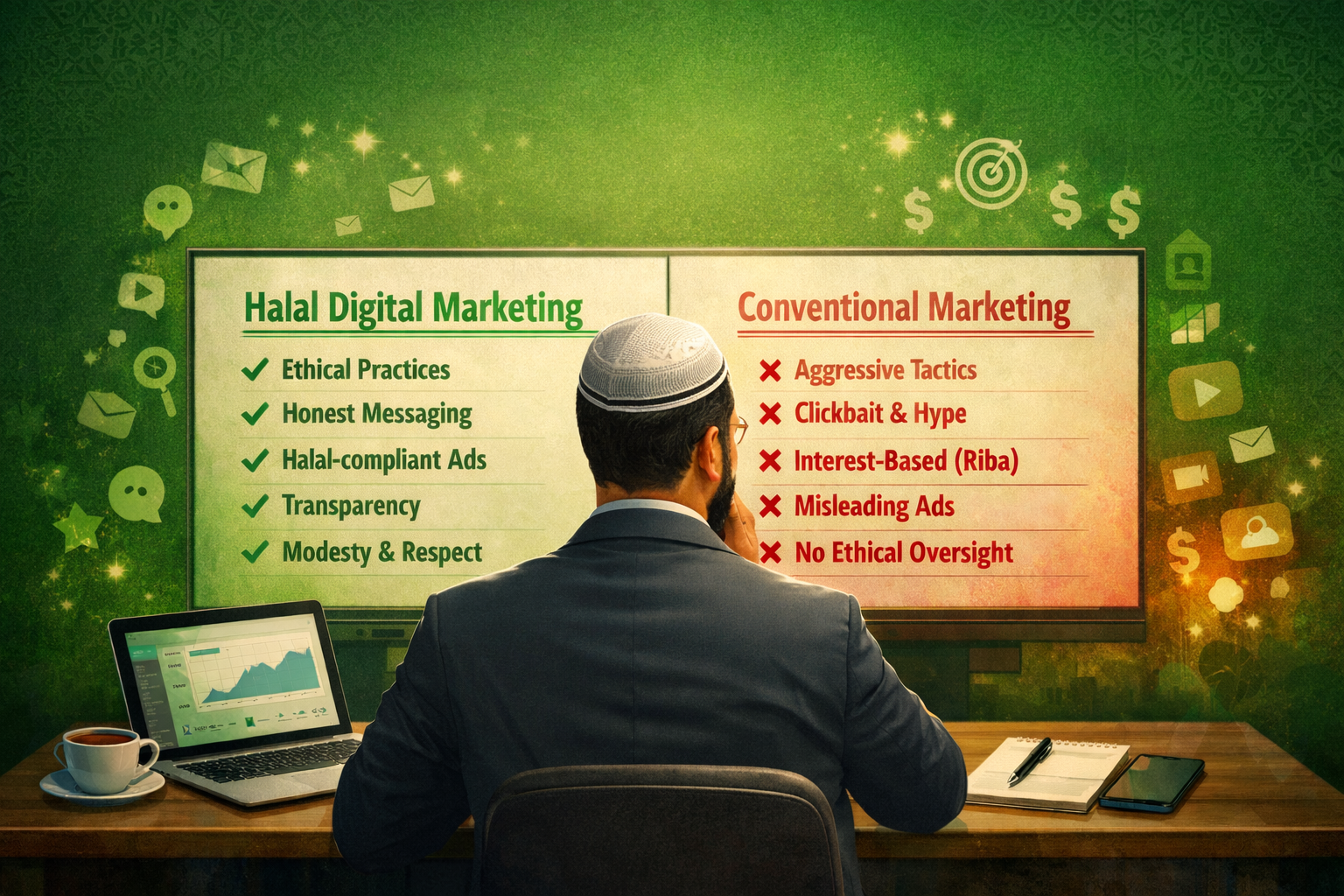
This is where the comparison between halal digital marketing and conventional marketing becomes essential. While both approaches may use similar tools and platforms, the philosophy, execution, and ethical framework behind them are fundamentally different.
In this in depth guide, we explore the key differences between halal digital marketing and conventional marketing, explain why these differences matter for Muslim businesses, and show how choosing the right approach can help entrepreneurs grow confidently without compromising their values.
Understanding Conventional Digital Marketing
Conventional digital marketing refers to the widely used, mainstream marketing methods adopted by most agencies and brands across the globe. The core objective of this approach is simple and performance driven: to generate maximum measurable results in the shortest possible time. These results often include higher website traffic, increased conversions, rapid audience engagement, and accelerated sales growth.
From a commercial standpoint, conventional digital marketing can be highly effective, especially in competitive industries where visibility and speed matter. Many businesses achieve quick wins using aggressive advertising strategies, funnel based campaigns, and automated systems. However, this results focused approach often operates without ethical, moral, or faith based considerations. For Muslim entrepreneurs who aim to grow their businesses in a halal and responsible manner, this can raise serious concerns.
Common Characteristics of Conventional Digital Marketing
Most conventional digital marketing agencies heavily prioritise performance metrics and scalability, often relying on tactics such as:
- Aggressive sales funnels that pressure users into quick decisions
- High urgency messaging that creates artificial scarcity or fear
- Emotional manipulation designed to trigger fear of missing out (FOMO)
- Clickbait headlines and exaggerated claims to boost engagement
- Automation systems with minimal human or ethical oversight
- Paid advertising placed purely based on performance, regardless of context
- Short term KPIs rather than long term trust and brand integrity
In many cases, the driving question behind these strategies is not “Is this ethical or responsible?” but simply “Does this convert?”
While not all conventional digital marketing practices are inherently unethical, the broader system is results first rather than values first. This can place Muslim business owners in difficult positions, forcing compromises that conflict with Islamic principles. Over time, this may lead to discomfort, loss of trust, or doubts about whether business growth remains genuinely halal.
What Is Halal Digital Marketing?
Halal digital marketing is a faith based, ethical approach to online marketing that aligns closely with Islamic marketing ethics, transparency, modesty, and accountability. It does not reject modern tools or platforms. Instead, it introduces a structured ethical framework that governs how digital marketing strategies are designed and executed.
A halal digital marketing agency uses the same tools, search engines, social media platforms, websites, email marketing, analytics, and automation but ensures that every action complies with halal business marketing principles. The focus is not just on growth, but on how that growth is achieved.
Core Principles of Halal Digital Marketing
Halal digital marketing is guided by values such as:
- Truthful, honest, and accurate communication
- Full transparency in pricing, reporting, and outcomes
- Avoidance of deceptive, misleading, or manipulative tactics
- Respect for modesty, cultural norms, and audience dignity
- No association with haram industries or prohibited promotions
- Avoidance of interest based (riba) financial practices
- Prioritizing long term trust over short term profits
For Muslim entrepreneurs, halal digital marketing offers clarity, peace of mind, and spiritual alignment. Business growth is pursued with intention, responsibility, and accountability to Allah. This approach ensures that success is not only sustainable and ethical but also aligned with faith based marketing values—allowing entrepreneurs to grow their brands without compromising their deen.
Key Difference 1: Values Driven Growth vs Results Only Growth
One of the most important differences between halal digital marketing and conventional marketing is intent.
Conventional Marketing Approach
Conventional marketing agencies typically ask:
- How can we get more clicks as quickly as possible?
- How can we increase conversions this month?
- How can we outperform competitors in the short term?
The methods used to achieve these outcomes are often secondary, as long as the numbers look impressive. This mindset can lead to tactics that prioritise speed over sustainability.
Halal Digital Marketing Approach
Halal digital marketing asks deeper and more responsible questions:
- Is this strategy ethical and transparent?
- Does this content represent the product or service honestly?
- Does this campaign respect the audience’s values and intelligence?
- Will this growth be sustainable and trustworthy over time?
For Muslim businesses, success is not measured only by profit, but by how that profit is earned. Halal digital marketing recognizes that sustainable success comes from integrity, not shortcuts.
Key Difference 2: Ethical Messaging vs Manipulative Content
Conventional Marketing Content
In conventional marketing, content is often designed to exploit emotions such as fear, urgency, or insecurity. Common tactics include:
- Overstated or unrealistic promises
- False urgency such as “Only 2 spots left”
- Emotional manipulation to push quick decisions
- Misleading before and after claims
- Hidden terms and conditions
While these methods may generate short term results, they often damage credibility and customer trust in the long run.
Halal Digital Marketing Content
Halal digital marketing focuses on:
- Clear and honest messaging
- Accurate representation of products or services
- Ethical persuasion rather than manipulation
- Educational and value driven content
- Respectful tone and language
For Muslim business marketing, trust is essential. Customers are more likely to remain loyal when they feel respected, informed, and valued rather than pressured.
Key Difference 3: Advertising Environment and Brand Safety
One of the most overlooked aspects of conventional marketing is where ads are displayed.
Risks in Conventional Advertising
In conventional paid advertising:
- Ads may appear next to inappropriate or haram content
- Platforms are chosen based on performance, not suitability
- There is often little manual monitoring of placements
Many Muslim entrepreneurs later discover that their brand was promoted alongside content that contradicts Islamic values, which can seriously harm reputation and trust.
Halal Safe Online Promotion
A halal digital marketing agency takes additional steps to:
- Choose appropriate and safe advertising platforms
- Avoid unsafe or questionable websites
- Monitor ad placements regularly
- Protect the brand’s Islamic identity
This difference directly impacts brand credibility and community trust.
Key Difference 4: Transparency vs Hidden Practices
Conventional Agency Practices
Some conventional agencies:
- Provide unclear or confusing performance reports
- Use technical jargon to hide weak results
- Lock clients into long term contracts
- Add hidden charges
- Avoid accountability
This lack of transparency can make business owners feel disconnected and unsure about where their money is going.
Halal Marketing Transparency
Halal digital marketing emphasizes:
- Clear and honest reporting
- Simple explanations of performance
- Transparent pricing
- Shared decision making
For Muslim entrepreneurs, transparency is not just professional—it is an ethical responsibility.
Key Difference 5: Short Term Results vs Sustainable Growth
Conventional Growth Strategy
Conventional marketing often prioritizes:
- Viral campaigns
- Sudden spikes in traffic
- Temporary engagement boosts
While these may look impressive initially, they can harm long term SEO, brand trust, and audience loyalty.
Halal Growth Strategy
Halal digital marketing focuses on:
- Organic growth
- Ethical SEO practices
- Long term content strategies
- Relationship based marketing
- Community trust
This approach aligns with Muslim entrepreneurs who prefer stability, consistency, and credibility.
Key Difference 6: Financial Practices and Riba Concerns
Conventional Financial Models
Some agencies operate with:
- Interest based payment plans
- Financing models involving riba
- Non transparent billing structures
These practices raise serious concerns for Muslim business owners.
Halal Aligned Financial Practices
A halal digital marketing agency ensures:
- Clear, interest free pricing
- Ethical billing practices
- No involvement in riba based systems
This consistency provides peace of mind and ethical alignment.
Key Difference 7: Audience Understanding and Cultural Sensitivity
Generic Audience Targeting
Conventional agencies often treat all audiences the same, ignoring cultural and religious differences.
Muslim Consumer Understanding
Halal digital marketing recognizes that Muslim audiences value:
- Modesty
- Family friendly messaging
- Ethical storytelling
- Community connection
Campaigns designed with this understanding resonate more deeply and build stronger loyalty.
Why These Differences Matter for Muslim Businesses
For Muslim entrepreneurs, marketing is not only about visibility, it is about representation.
Choosing between halal digital marketing and conventional marketing affects:
- Brand reputation
- Customer trust
- Spiritual peace
- Long term sustainability
- Community perception
When marketing aligns with values, businesses grow with confidence rather than compromise.
The Role of a Halal Digital Marketing Agency
A professional halal digital marketing agency plays a vital role in helping Muslim businesses grow confidently in the modern digital landscape. It acts as a bridge between powerful marketing tools and Islamic ethical standards, ensuring that innovation never comes at the cost of values.
Unlike conventional agencies that focus only on numbers, a halal focused agency approaches growth with responsibility and intention. It understands that marketing is not just about visibility, but also about representation, trust, and long term impact.
A halal digital marketing agency:
- Understands SEO, paid ads, content creation, branding, and analytics
- Applies ethical and halal guidelines to every strategy and campaign
- Carefully evaluates platforms, messaging, and placements
- Protects Muslim brand identity from misrepresentation
- Builds trust based growth systems rather than short term hype
This role is especially important for Muslim businesses operating in competitive global markets, where pressure to adopt questionable tactics is high. A halal agency helps businesses grow without ethical confusion or compromise.
How DigiMuslim Approaches Halal Digital Marketing
DigiMuslim was created to solve a clear and growing problem: the lack of faith aligned digital marketing services designed specifically for Muslim businesses.
Our approach is intentional, structured, and deeply rooted in ethical responsibility.
DigiMuslim’s halal first approach includes:
- Carefully designed halal marketing strategies tailored to business goals
- Ethical SEO and content marketing focused on long term visibility
- Transparent reporting with clear, honest performance insights
- Cultural sensitivity and modest branding across all creatives
- Global experience working with diverse Muslim markets
At DigiMuslim, every campaign is built to balance performance with principles, ensuring results are achieved in a way that earns trust and confidence.
Halal Digital Marketing Is Not Slower, It’s Smarter
A common misconception is that ethical marketing limits growth. In reality, halal digital marketing often leads to stronger, more sustainable long term results.
Brands that grow ethically tend to:
- Retain customers for longer periods
- Build deeper trust and loyalty
- Face fewer reputation and compliance risks
- Develop strong, engaged communities
- Achieve stable and sustainable success
This is why more Muslim entrepreneurs are shifting away from conventional agencies and choosing halal marketing solutions that support both growth and integrity.
Choosing the Right Path Forward
If you are a Muslim business owner questioning whether your current marketing approach truly aligns with your values, this comparison matters.
The choice is not between growth and faith.
It is between short term shortcuts and long term integrity.
Halal digital marketing proves that success and ethics can coexist—and when done correctly, they strengthen each other.
Ready to Grow Your Business the Halal Way?
If you are a Muslim business owner who wants to succeed online without compromising your values, this is the moment to choose a better path. Digital growth does not have to come with ethical doubts, uncomfortable compromises, or strategies that conflict with your principles.
Halal digital marketing is designed for businesses that want clarity, consistency, and confidence in the way they grow.
If you want to:
- Grow your business online while staying true to Islamic values
- Reach Muslim audiences in an authentic and respectful way
- Avoid misleading, manipulative, or unethical marketing practices
- Build long term trust and credibility with your customers
- Align your business success with Islamic ethics and purpose
Then halal digital marketing is not just an option, it is the right foundation for your growth.
Book a free consultation with DigiMuslim
During this consultation, our team will:
- Review your current marketing strategies and online presence
- Identify any ethical risks or misalignments
- Recommend halal aligned, transparent marketing solutions
- Create a clear roadmap for sustainable, faith conscious growth
Final Thought
In a digital world driven by speed, pressure, and shortcuts, halal digital marketing offers something increasingly rare: clarity, integrity, and purpose. It allows Muslim entrepreneurs to grow with confidence, knowing that their success is built on honesty, trust, and responsibility.
For Muslim business owners, this difference is not small. It shapes your reputation, your relationships, and the long term future of your business.




One Response